Image failed to load
SGKGZ Oral Liquid Filling Line for 5–25ml Bottle Washing, Drying, Filling and Roll Capping
Product Overview
Definition
An Oral Liquid Filling Line is a fully integrated pharmaceutical packaging system that automates the complete manufacturing process for small-volume liquid medicines and healthcare products. Instead of relying on separate machines connected by manual handling, the production line synchronizes bottle washing, sterilization, filling, capping, and product discharge into one continuous workflow.
The SGKGZ series is specifically designed for 5–25 ml tubular oral liquid bottles, enabling manufacturers to achieve higher production efficiency while reducing contamination risks associated with manual bottle transfer. Compared with a conventional stand-alone oral liquid filling machine, an integrated production line offers better process stability, improved traceability, and lower operating costs. Its modular architecture also allows customers to install the complete line or individual equipment according to factory layout, production requirements, and future expansion plans.
How It Works
The SGKGZ Oral Liquid Filling and Capping Machine operates through a synchronized production sequence that ensures each bottle is thoroughly cleaned, sterilized, accurately filled, and securely sealed before leaving the production line.
Production begins with automatic bottle feeding, where empty containers are transferred onto the conveyor without manual intervention. Bottles then enter the vertical ultrasonic bottle washing machine, which removes dust, particles, and residues from both the interior and exterior surfaces using ultrasonic cleaning technology combined with multiple washing cycles. A three-stage purified water rinse followed by compressed air flushing further improves bottle cleanliness and prepares the containers for sterilization.
After washing, bottles pass through the hot air circulation sterilization tunnel, where controlled high-temperature airflow dries the bottles and eliminates microorganisms. This process creates suitable conditions for hygienic pharmaceutical filling while reducing the possibility of secondary contamination.
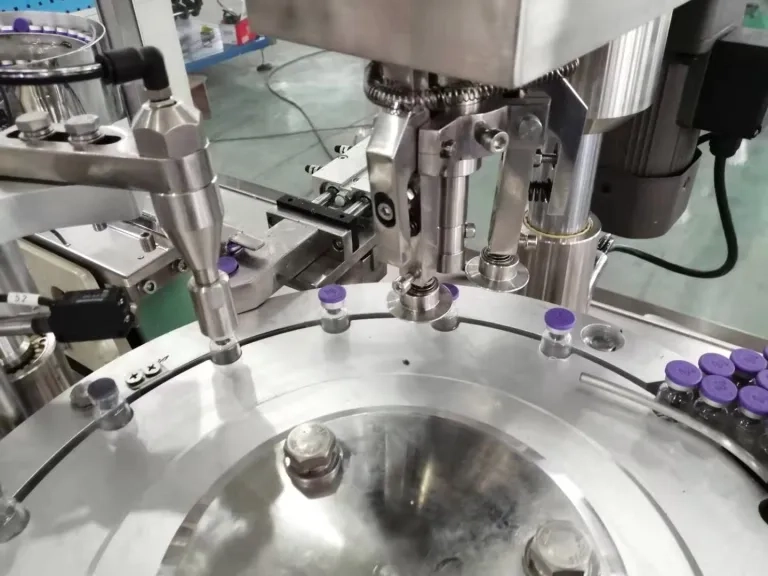
The sterilized bottles are transferred directly into the precision oral liquid filling machine, where the required liquid volume is dispensed with a filling accuracy of ±1–2%. Once filling is completed, caps are automatically positioned and secured by the roll capping mechanism, ensuring consistent sealing quality across every bottle. Finished products are then discharged continuously for subsequent inspection, labeling, cartoning, or other downstream packaging operations.
The fully integrated production process minimizes manual handling, improves production consistency, and supports continuous pharmaceutical manufacturing with stable output and reliable performance.
Technical Specifications
| Specification | SGKGZ-4 | SGKGZ-12 | SGKGZ-16 |
| Bottle Size | 5–25 ml | 5–25 ml | 5–25 ml |
| Production Speed | 60–80 bottles/min | 150–220 bottles/min | 300–350 bottles/min |
| Filling Accuracy | ±1–2% | ±1–2% | ±1–2% |
| Water Pressure | 0.25–0.35 MPa | 0.25–0.35 MPa | 0.25–0.35 MPa |
| Water Consumption | 0.5 m³/h | 1.5 m³/h | 0.5 m³/h |
| Power Supply | 380V / 220V | 380V / 220V | 380V / 220V |
| Installed Power | 8 kW | 42 kW | 80 kW |
| Compressed Air Pressure | 0.3–0.5 MPa | 0.3–0.5 MPa | 0.3–0.5 MPa |
| Air Consumption | 10 m³/h | 5–15 m³/h | 30–45 m³/h |
| Exhaust Volume | — | 2600 m³/h | 3200 m³/h |
| Machine Weight | 650 kg | 3000 kg | 7500 kg |
| Dimensions (L × W × H) | 4000 × 1300 × 1500 mm | 11000 × 1800 × 2000 mm | 12000 × 2500 × 2400 mm |
Selection Guide
Selecting the right Oral Liquid Filling Line depends on production capacity, factory scale, and future expansion plans. The SGKGZ series offers three standard models that cover pilot production, medium-scale manufacturing, and high-speed commercial production while maintaining the same washing, sterilization, filling, and roll capping process.
| Model | Recommended Output | Best For | Recommended Application |
| SGKGZ-4 | 60–80 bottles/min | Small pharmaceutical plants and R&D facilities | Small-batch production, clinical products, new product development |
| SGKGZ-12 | 150–220 bottles/min | Medium-sized pharmaceutical and nutraceutical manufacturers | Daily commercial production with multiple product batches |
| SGKGZ-16 | 300–350 bottles/min | Large pharmaceutical factories | High-volume continuous manufacturing and automated packaging lines |
The SGKGZ-4 is well suited to manufacturers with lower production volumes or facilities producing multiple product varieties in small batches. Its compact footprint and lower utility consumption make it an economical choice for laboratories, pilot plants, and growing pharmaceutical companies.
For companies seeking higher throughput without sacrificing flexibility, the SGKGZ-12 provides an ideal balance between production efficiency and investment cost. It is commonly selected by manufacturers producing oral solutions, vitamin drinks, herbal extracts, and healthcare products for regional or national markets.
The SGKGZ-16 is designed for fully automated, high-capacity production environments where continuous operation and maximum productivity are priorities. It integrates seamlessly with downstream inspection, labeling, cartoning, and case packing systems, making it suitable for modern pharmaceutical production lines.
Regardless of the model selected, the production line can be customized to accommodate different bottle dimensions, filling volumes, conveyor layouts, and downstream packaging equipment, allowing manufacturers to build a complete oral liquid packaging line that matches their specific production requirements.
Comparison
While individual filling machines remain suitable for certain production environments, an integrated Oral Liquid Production Line provides greater efficiency, product consistency, and long-term operational benefits by connecting every processing stage into one automated workflow.
| Feature | Integrated Oral Liquid Filling Line | Stand-alone Filling Machine |
| Automation Level | Fully automatic bottle washing, sterilization, filling, and capping | Filling process only |
| Production Efficiency | High continuous output with synchronized operation | Dependent on manual transfer between machines |
| Labor Requirement | Low | Higher |
| Product Consistency | Excellent process stability | Varies with operator handling |
| Contamination Risk | Reduced through enclosed automated transfer | Higher due to manual bottle movement |
| GMP Production | Well suited for GMP-oriented facilities | Requires additional integration |
| Production Expansion | Easy integration with labeling, cartoning, and inspection systems | Limited expansion capability |
| Operating Cost | Lower over long-term operation | Lower initial investment but higher labor cost |
For pharmaceutical manufacturers focused on consistent quality and scalable production, a complete Oral Liquid Filling and Capping Line typically delivers a better return on investment than purchasing separate machines. The integrated design not only shortens production cycles but also simplifies process management, maintenance scheduling, and production monitoring.
Applications
The SGKGZ Oral Liquid Filling Line is designed for manufacturers requiring hygienic, accurate, and efficient filling of small-volume liquid products. Its integrated washing, sterilization, filling, and sealing process makes it suitable for facilities where product cleanliness and dosage consistency are critical.
In the pharmaceutical industry, the production line is widely used for manufacturing oral liquid medicines, pediatric syrups, herbal preparations, and traditional medicine extracts packaged in 5–25 ml glass bottles. The stable filling accuracy and continuous production process help manufacturers comply with stringent quality control requirements while improving production efficiency.
The equipment is also suitable for nutraceutical and healthcare product manufacturers producing vitamin solutions, dietary supplements, botanical extracts, enzyme preparations, and functional health beverages. With flexible configuration options, the system can accommodate frequent product changeovers while maintaining reliable production performance.
For contract manufacturers (CMOs/CDMOs), the modular design supports multiple customer projects with varying production volumes. The line can operate independently or integrate with automatic bottle unscramblers, leak detection systems, labeling machines, cartoners, and case packers to create a complete pharmaceutical packaging solution.
Whether used for pilot-scale production or large-scale commercial manufacturing, the SGKGZ series provides a dependable automatic filling line that combines precision, flexibility, and long-term operational stability, making it an ideal choice for modern pharmaceutical and healthcare production facilities.
Installation & Maintenance
The SGKGZ Oral Liquid Filling Line is designed for straightforward installation and reliable long-term operation. Its modular structure allows the bottle washing machine, sterilization tunnel, and filling & roll capping machine to be installed as a complete production line or as independent units, making it adaptable to both new pharmaceutical plants and existing production facilities.
To ensure stable performance, the equipment should be installed on a level industrial floor with sufficient space for operation, routine maintenance, and future production expansion. The production area should provide a stable 380V/220V power supply, purified water, compressed air at 0.3–0.5 MPa, and appropriate ventilation for the hot air sterilization tunnel. For facilities operating under GMP conditions, installation within a controlled cleanroom environment is recommended to further reduce contamination risks.
Before commissioning, each machine should be calibrated to match the bottle size, filling volume, and production speed required for the application. Operators should verify conveyor synchronization, filling accuracy, cap feeding alignment, and sterilization temperature to ensure the entire oral liquid production line operates smoothly.
Routine maintenance is essential for maintaining filling precision and production efficiency. Components that come into contact with the product should be cleaned after each production batch using approved pharmaceutical cleaning procedures. Ultrasonic washing nozzles, filling nozzles, conveyors, sealing rollers, and air filters should be inspected regularly to prevent wear or blockage. Lubrication of transmission components should follow the manufacturer's maintenance schedule, while electrical systems, sensors, and pneumatic components should be checked periodically to minimize unexpected downtime.
With preventive maintenance and proper operator training, the SGKGZ series delivers stable production performance, extended equipment life, and lower overall operating costs.
Compliance & Industry Standards
The SGKGZ Oral Liquid Filling and Capping Line is engineered according to internationally recognized pharmaceutical equipment design principles. Its enclosed production process, automated bottle transfer, and hygienic construction support clean manufacturing environments while helping manufacturers improve process consistency and product quality.
The production line can be configured to support GMP-oriented pharmaceutical manufacturing, where automated washing, sterilization, filling, and capping reduce manual intervention and minimize the risk of secondary contamination. Stainless steel product-contact components and easy-to-clean machine structures facilitate routine sanitation and maintenance in regulated production environments.
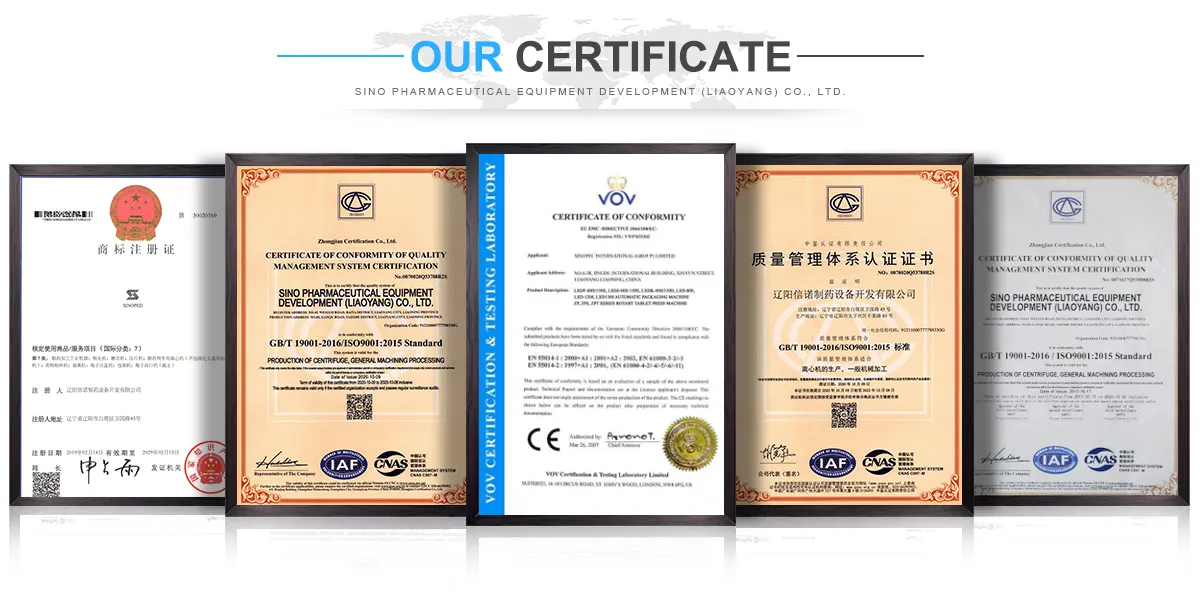
For international projects, the equipment can be manufactured to comply with customer-specific electrical standards and regional safety requirements. Optional configurations may be available to support CE market requirements, while manufacturing quality management can be aligned with ISO 9001 quality systems depending on project specifications. The production line can also be integrated into cleanroom facilities and connected with inspection, labeling, cartoning, and serialization equipment to support modern pharmaceutical packaging operations.
As compliance requirements vary by country and application, final equipment configuration should be confirmed according to the customer's regulatory standards and validation procedures.
Troubleshooting
| Problem | Possible Cause | Suggested Solution |
| Inconsistent filling volume | Filling nozzle blockage, incorrect parameter settings, unstable liquid supply | Clean the filling system, recalibrate filling parameters, and inspect the liquid supply system. |
| Bottles fail to enter the washing station smoothly | Bottle feeding misalignment or conveyor obstruction | Adjust the bottle feeding mechanism and inspect the conveyor for foreign objects or worn guides. |
| Poor bottle cleaning performance | Blocked washing nozzles, insufficient water pressure, or reduced ultrasonic efficiency | Clean or replace nozzles, verify purified water pressure, and inspect the ultrasonic cleaning system. |
| Bottles are not completely dry after sterilization | Sterilization tunnel temperature too low or airflow insufficient | Check heating elements, temperature settings, and air circulation performance. |
| Cap sealing is loose or uneven | Incorrect cap positioning or worn roll capping rollers | Re-adjust the cap feeding mechanism and inspect or replace worn sealing components. |
| Machine alarm or unexpected shutdown | Sensor malfunction, electrical fault, or pneumatic pressure fluctuation | Review alarm messages, inspect sensors, verify electrical connections, and ensure stable compressed air pressure. |
| Reduced production speed | Conveyor synchronization issues or excessive mechanical wear | Check conveyor drive systems, inspect transmission components, and perform preventive maintenance. |
Most production interruptions can be prevented through routine inspection, scheduled maintenance, and regular calibration of the washing, filling, and capping systems. Establishing a preventive maintenance program helps maintain consistent filling accuracy, reduces downtime, and extends equipment service life.
Frequently Asked Questions (FAQ)
What bottle sizes can the SGKGZ Oral Liquid Filling Line handle?
The standard configuration is designed for 5–25 ml tubular glass bottles. Customized bottle formats can be supported according to production requirements.
What products can this production line fill?
The equipment is suitable for oral liquid medicines, herbal extracts, vitamin solutions, healthcare products, nutraceutical liquids, and similar low- to medium-viscosity pharmaceutical formulations.
What filling accuracy can be achieved?
The standard filling accuracy is ±1–2%, depending on product characteristics, filling volume, and production conditions.
Can the production line operate as individual machines?
Yes. The bottle washing machine, sterilization tunnel, and oral liquid filling machine can operate independently or as a fully integrated production line.
Is the equipment suitable for GMP pharmaceutical production?
The production line is designed with hygienic construction and automated processing that support GMP-oriented manufacturing. Specific validation and compliance requirements can be configured according to customer projects.
Can the machine be customized?
Yes. Bottle dimensions, filling volume, production capacity, electrical standards, conveyor layout, and downstream packaging integration can all be customized to meet specific production needs.
Can this production line connect with other packaging equipment?
Yes. The SGKGZ series can be integrated with bottle unscramblers, visual inspection systems, labeling machines, cartoning machines, case packers, and palletizing systems to create a complete pharmaceutical packaging line.
What utilities are required for installation?
The production line requires a stable 380V/220V power supply, purified water, compressed air at 0.3–0.5 MPa, and appropriate exhaust ventilation for the sterilization tunnel.
How often should maintenance be performed?
Daily cleaning after production, weekly inspections of key mechanical components, and scheduled preventive maintenance based on operating hours are recommended to ensure long-term reliability.
Which industries commonly use this equipment?
The SGKGZ series is widely used by pharmaceutical manufacturers, nutraceutical producers, healthcare product companies, traditional herbal medicine manufacturers, and contract manufacturing organizations (CMOs/CDMOs) requiring an efficient and reliable oral liquid packaging line.
Contact our International Sales Manager Brucr for professional support regarding pharmaceutical machinery, production equipment, and customized manufacturing solutions.
Sales Manager: Brucr
WhatsApp: +86 13322335577
Our team provides global customers with equipment consultation, technical assistance, and project support.
Related products
Image failed to load
Sealed Solid Dosage Granulation Line
The Sealed Solid Dosage Granulation Line is a fully integrated wet granulation system designed for pharmaceutical, nutraceutical, food and chemical manufacturers. By combining high-speed wet granulation, vacuum conveying, fluid bed drying, milling and blending into one enclosed production workflow, the system improves product consistency, reduces contamination risks and supports efficient GMP-oriented manufacturing. Its modular design allows flexible integration with downstream tablet compression, capsule filling and packaging equipment, making it suitable for both new production facilities and plant upgrades.
Image failed to load
Automatic Tablet Counting Machine
Sinoped Automatic Tablet Counting Machine is an automated counting and filling solution for tablets, capsules, and solid healthcare products. Featuring infrared detection, multi-channel vibration feeding, and touchscreen operation, it supports pharmaceutical and nutraceutical packaging processes.